
While developing the capability to monitor marine energy, this PMEC team is unlocking a new way to sense in the ocean.
A PMEC Insider Story, by Judy Twedt.
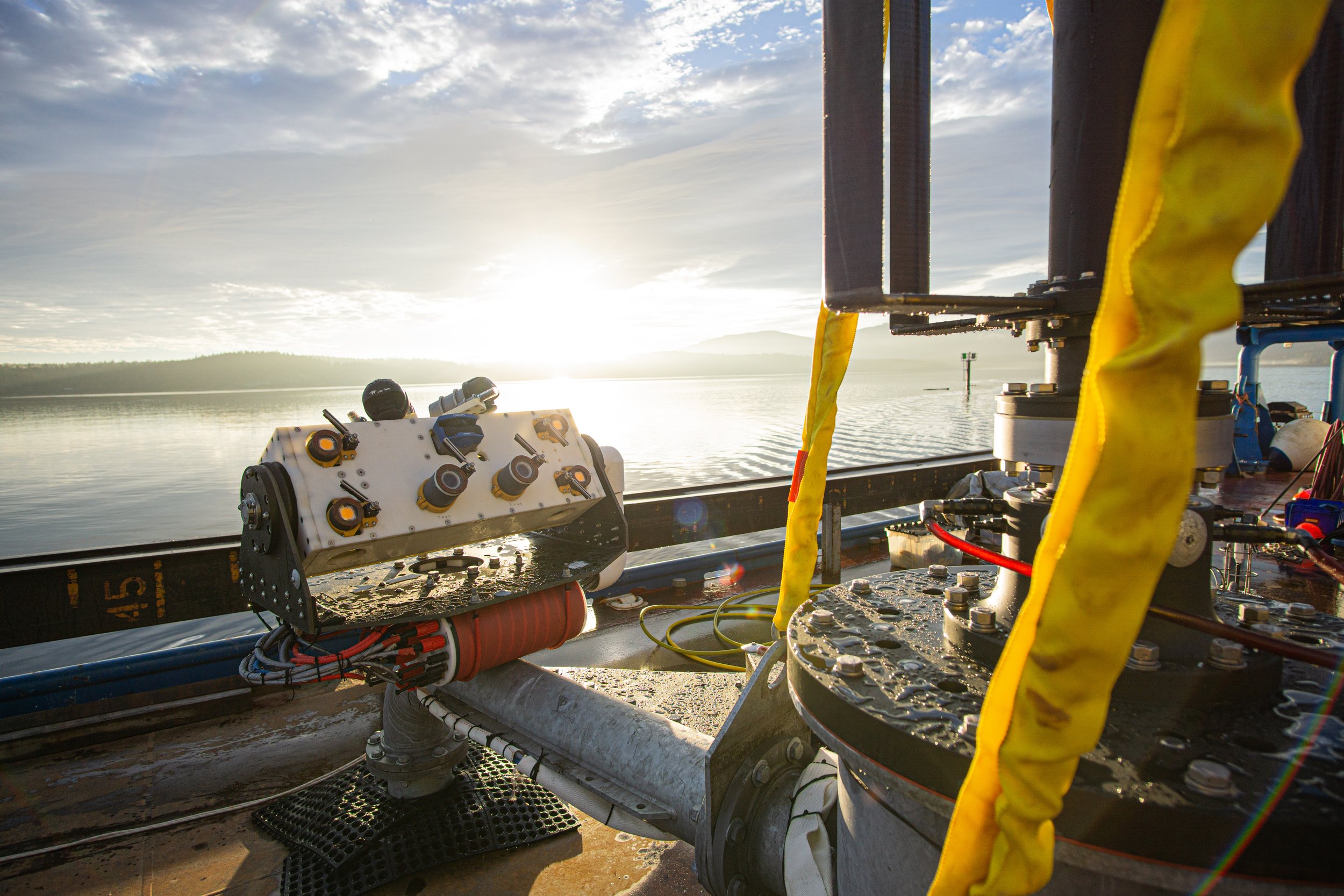
The Adaptable Monitoring Package (AMP) mounted on the base of the Turbine Lander before deployment in Sequim Bay, Washington, 2023.
“How we’ve studied marine environments, it's like flying over a rainforest and dropping a fishing hook. That incredibly limits our understanding.” This is James Joslin, principal engineer with MarineSitu, a company that builds ocean sensing devices. Early in his career, Joslin was the chief engineer on a sailing school vessel with Sea Education Association. His job was to repair the sensors and devices that went over the side of the boat to investigate the oceans. Now he leads MarineSitu, a small company on a big mission to put scientific eyes and ears in the ocean. Joslin and others in MarineSitu recently collaborated with PMEC researchers on a project that did something no one has ever done before: observed animals interact with a small tidal turbine with an optical camera and sonar.
It sounds simple, putting a camera underwater to observe animal interactions with a tidal turbine. The Mars Rover photographed Earth from another planet more than 20 years ago, and decades of remote sensing from satellites has enabled entirely new fields of research into Earth’s surface and atmosphere. But satellite vision cannot see into the oceans which cover more than 70% of our planet, and the crisp, clear cinematic underwater videos featured in documentaries like Blue Planet are done with one-time, multimillion-dollar Hollywood budgets.
And so nearly three quarters of a century after the first satellite was launched, the majority of the oceans are still unknown, with over 2,000 new species recognized by the scientific community each year. In addition to the basic questions about what’s out there, the growing number of human activities in the oceans – from energy production to fishing to deep sea mining and aquaculture – need to be monitored.
Why has ocean sensing lagged so far behind sensing from space?
One reason is that ocean water is both corrosive and teeming with life. Algae, barnacles, and loads of other critters are happy to make their homes on any new surface left in the water. Microorganisms also contribute to water turbidity, making it cloudy. Even in clear water, light cannot penetrate beyond a few hundred meters. Satellites orbit in the outer layer of Earth’s atmosphere, where they don’t have contact with rain, insects, or bird poop. That’s a big advantage.
Another reason is that satellites are powered in situ by the abundant energy from the sun, allowing for their remote, long-term operation. “When we're doing science and collecting data in the ocean, power is a huge limiting factor,” says Emma Cotter, a research scientist at Pacific Northwest National Laboratory and Associate Director of PMEC. If oceanographic sensors could be powered in situ from the wave or tidal energy they are immersed in, this would be a game changer for ocean monitoring.
Ocean waves and tidal currents are highly energetic and hold tremendous potential to generate electricity and provide power at sea, but one of the hurdles that must be overcome for this energy technology to advance is the regulatory requirement to monitor and assess its impact on the local ecosystem.
This presents a perfect Catch-22: Ocean monitoring devices are power limited, and the marine energy converters which could power them from the ocean’s abundance of kinetic energy also need to be monitored to ensure they are operating safely.
For over a decade, a PMEC team has been addressing just this challenge. Recently, they confronted the power and monitoring issues simultaneously, by coupling MarineSitu’s state-of-the-art environmental monitoring device to a compact tidal turbine. In January they published results documenting 1,044 unique interactions between marine animals and the turbine, including video of seals swimming up to the turbine while in operation, and then swimming away. Those results, from a single first-time deployment, have already caught headlines.
The AMP that captured these revelatory observations was not a new innovation, but an iterative response to real-world regulatory and cost challenges encountered during the early stages of a tidal energy project.
Never a Wasted Failure
“It all goes back to the Snohomish County PUD project,” said Brian Polagye, a professor of mechanical engineering at the University of Washington. People on the team refer to Brian as the mastermind behind this effort, but he immediately deflects this credit back to the multi-institutional team members who have worked together for many years.
In 2007, the Snohomish County Public Utility District began work on a tidal energy project in Admiralty Inlet, Puget Sound, and Polagye – who was just finishing his dissertation – was interested in what would be needed to mitigate environmental risks. As regulatory discussions intensified, it became clear that the monitoring—particularly for fish, marine mammals, underwater noise, and turbine interactions—would be complex, uncertain, and extremely expensive. The cost and scope of the monitoring required became one of the barriers to project advancement.
That tidal power system never came to fruition, but the research team at UW continued to develop an environmental monitoring system for marine energy projects, knowing that this would be required for future deployments.

A stereo photograph taken from the first iteration of the AMP camera on deck before deployment in Admiralty Inlet, 2012.
Early in this research process Polagye came up with a list of things needed to do environmental monitoring well, and the AMP was born from that wish list. “It’s more of a methodology than an actual physical thing,” says Joslin, who was a doctoral student in Polagye’s lab at the time. “We wanted to attack all of these problems: lower the cost of instrumentation, maintain the instruments, and deal with the data load.” They tested an early version of the AMP in Admiralty Inlet in 2012. Later, they went through a whole process of commissioning a new boat to do more testing. “This obviously…did not happen quickly,” recounted Joslin.
At the same time, others in the research lab developed a small-scale tidal turbine to demonstrate power-at-sea capability. “We were planning to deploy the [Turbine] Lander and knew that some sort of environmental monitoring would be required, so we integrated that from the get-go. There was a component of it that was a labor of love – we had no obligation to do it,” recounts Chris Bassett, the Principal Investigator (aka lead scientist) on the Turbine Lander and the environmental data analysis. He describes the AMP as an extremely rugged, ocean-tolerant desktop computer into which you can plug various sensors that play well together and can do real-time processing.
Adaptability is the Name of the Game
“Its name is the Adaptable Monitoring Package, or AMP, and the A carries a lot of weight in that name,” says Bassett. “Imagine you buy a new desktop computer," he explains. “How miffed would you be if every time you had to plug in a new hard drive, a mouse, a computer monitor, or anything else, you had to reprogram the computer for the new item to go in, and make sure that the mouse and the screen were programmed to talk to each other and all behave well together. That would be obnoxious, right?”
That is the state of many current moorings for oceanographic monitoring, says Bassett. They have a collection of different sensors on them, and they all have their own battery packs, asynchronous clocks, and sometimes they interfere with and talk over one another. When researchers get all the data back, they have a lot of clean-up to do before they can start to learn anything from the data.
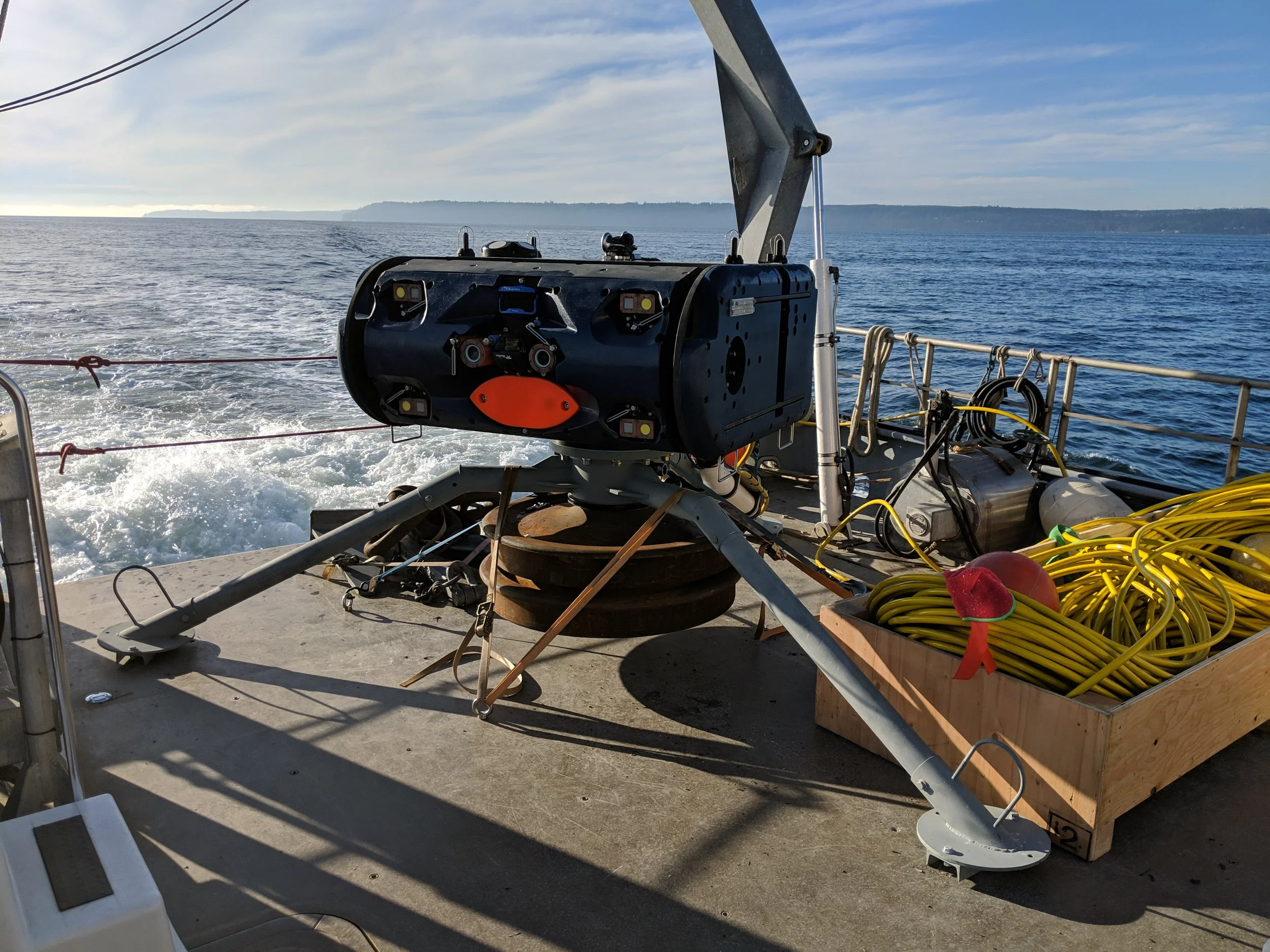
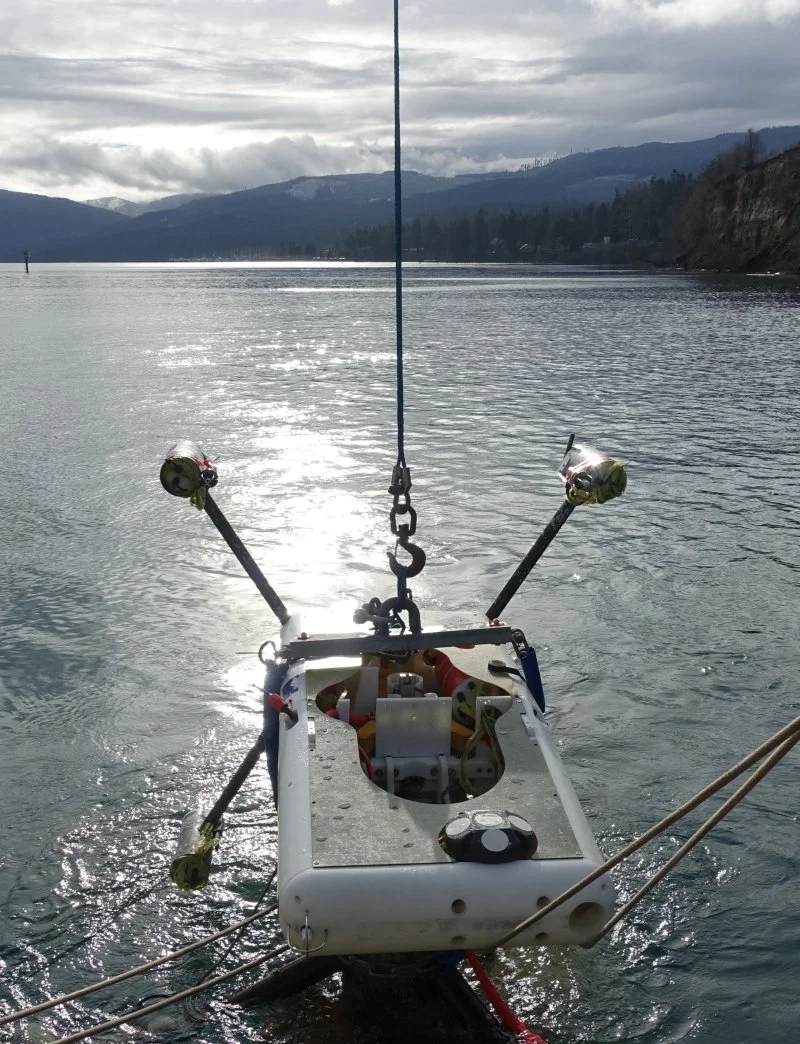
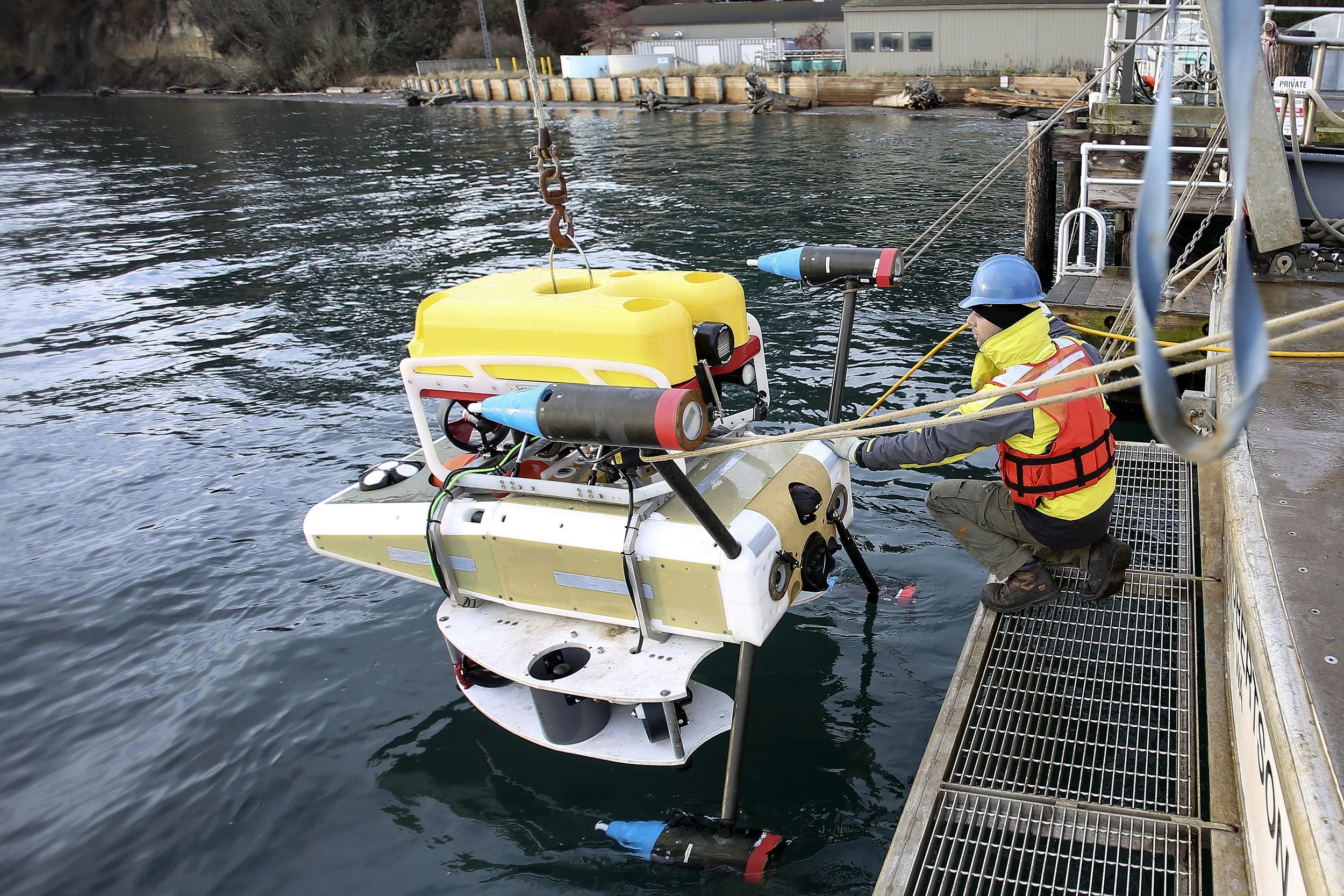
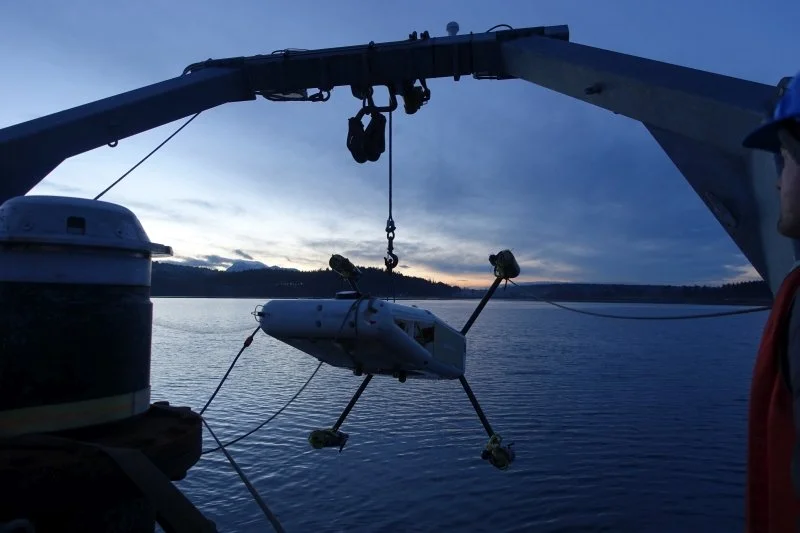
The AMP has been through many iterations of R&D starting from its initial inception in the lab, and now Joslin and his team at MarineSitu have turned the system into a commercially scalable product. “Instrument reliability has significantly improved,” he says. “We’ve also brought the cost down” and now this monitoring system stands to benefit a wide array of applications.
“People have had a vision that this [integrated environmental sensing] needs to be done,” said Bassett, “and what I think most people don’t understand is how much effort it takes to get there.” The team worked for close to a decade on multiple iterations of the system to design and build the current capabilities. “In principle [this work] sounds easy but it’s really easy to not respect the complexities of the problem until your team is the one working on it.”
Trust, but Verify
Marine energy is uniquely capable of providing electrons not only for oceanographic research and power at sea, but also for coastal and remote communities, and yet objections to proposed projects often stem from fears of adverse local ecological impacts. A growing body of research has demonstrated that many of these fears are not substantiated by evidence. A recent report paints a nuanced picture of the local ecological effects of tidal turbines, and found that many studies have reported neutral as well as positive ecological effects from tidal power generation.
The AMP camera observations from the Sequim deployment, in which the turbine was in operation for nearly five months, showed that collision risk is low. Lots of diving birds were observed, but they didn’t dive near the turbine while it was rotating. Fish hung around it a bit more when it wasn’t moving, and some small fish who can’t swim against the current collided with the turbine, but no big fish were observed. Seals approached it, then swam away.
“The animal observations we gathered were fairly rare events,” says Bassett. “I literally watched hours of data in real time and didn’t see a single thing. Come, something, anything! We call it fish tv. We should call it non-fish tv.”
The team is now preparing for the second deployment of the Lander. “We want to be able to determine rates of occurrence [of interactions],” says Cotter, so that they can start to statistically quantify the interactions. They’ve also improved the efficiency of the turbine’s performance as well as of the AMP, as detailed in their paper on lessons learned. “Even a little bit more, what seems like really small amounts of power, can make pretty big differences in terms of what we're able to do,” and Cotter and her colleagues plan to make use of every watt.
In a parallel effort, and to further lower the monitoring costs of tidal energy projects, their colleagues at PNNL and UW are developing sensors for turbine blades that could determine whether contact occurs at a fraction of the cost of AMP-based monitoring.
Powering New Eyes and Ears in the Ocean
This coordinated effort to develop environmental monitoring and power generation simultaneously could forever alter how we look and listen into the oceans. “I'm really excited about the possibility to provide more power for oceanographic sensors, to be able to collect more data, collect data in locations that were previously inaccessible, and use different types of sensors for new applications,” says Cotter.
As of February 2026, MarineSitu has 15 AMPs deployed in different sites around the world and expects to have as many as 50 by the end of the year. As costs go down, these deployments could grow rapidly. In addition to oceanographic research and marine energy monitoring, Joslin says they could monitor illegal fishing and support aquaculture and future food production.
As for Polagye, he’s hoping this work will enable the monitoring and protection of whales and other marine mammals and unlock the potential of tidal energy.
_____
This work is funded by grants from the U.S. Navy and the U.S. Department of Energy.